
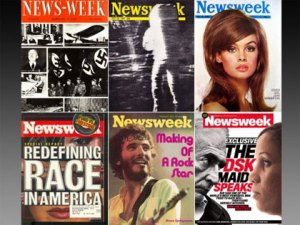
Newsweek’s iconic covers will become a relic of the past as the magazine switches to a digital-only format in 2013.
The last time I read a print newspaper, it was not a pleasant experience. Sitting in a cramped diner booth, I had to keep folding it like a paper airplane to fit around my food, nearly knocking over my water glass. The newsprint blackened my fingers, which then blackened my shirt. Flipping back and forth between pages quickly became work. I spent years reporting for newspapers, and still the temptation to whip out my iPhone was overwhelming. Finally I gave in and used my mobile device to pull up the same story I was reading, which now had several updates plus more info in the reader comments below. The coffee-stained paper, on the other hand, was both figuratively and literally old news.
The declining value of print is evident in the number of magazines that land in my mailbox to which I never subscribed. Companies are literally giving them away simply to promote brand awareness. Each time a publication reduces or stops its print issues—last month it was the New Orleans Times-Picayune, this month it’s Newsweek—reports often lament the decision as yet another sign of legacy media heading toward extinction.
Well, bunk. Consumers will always thirst for news, locally and globally. Innovative publications—magazines like Wired and the New Yorker come to mind—have smoothly adapted to tablets, repackaging their product in a fresh fashion. Other outfits are investing in means of revenue besides old-fashioned subscriptions. U.S. News & World Report, for example, sells college guides to both students and universities that generate hundreds of thousands of dollars. The last newspaper where I worked, the Columbia Missourian, now has its own app, and charges fees to read any story online that’s more than 24 hours old. Newsweek is adopting a subscription-only model. Whether it succeeds remains to be seen.
It’s true that, in the throes of an industry in transition, a depressing number of publications have gone under, even those doing their best to innovate. But so have many restaurants, mom-and pop stores, and online startups during the same period. Downsizing does not mean devastation.
Print, like the Winklevoss twins, will never go away entirely. But its frequency should be restricted to that of a trip to see the in-laws. On special events, from presidential elections to little Chloe’s game-winning soccer goal, consumers want to see notable exploits in print. You can’t frame pixels, and taping a printout to the fridge just isn’t the same. When publications zero in on the formula to deliver their product in print to consumers who want it while using the latest technologies to grow a digital audience, they will have taken an important step to ensuring their future.
 Brian Jarvis
You must be logged in to post a comment.