
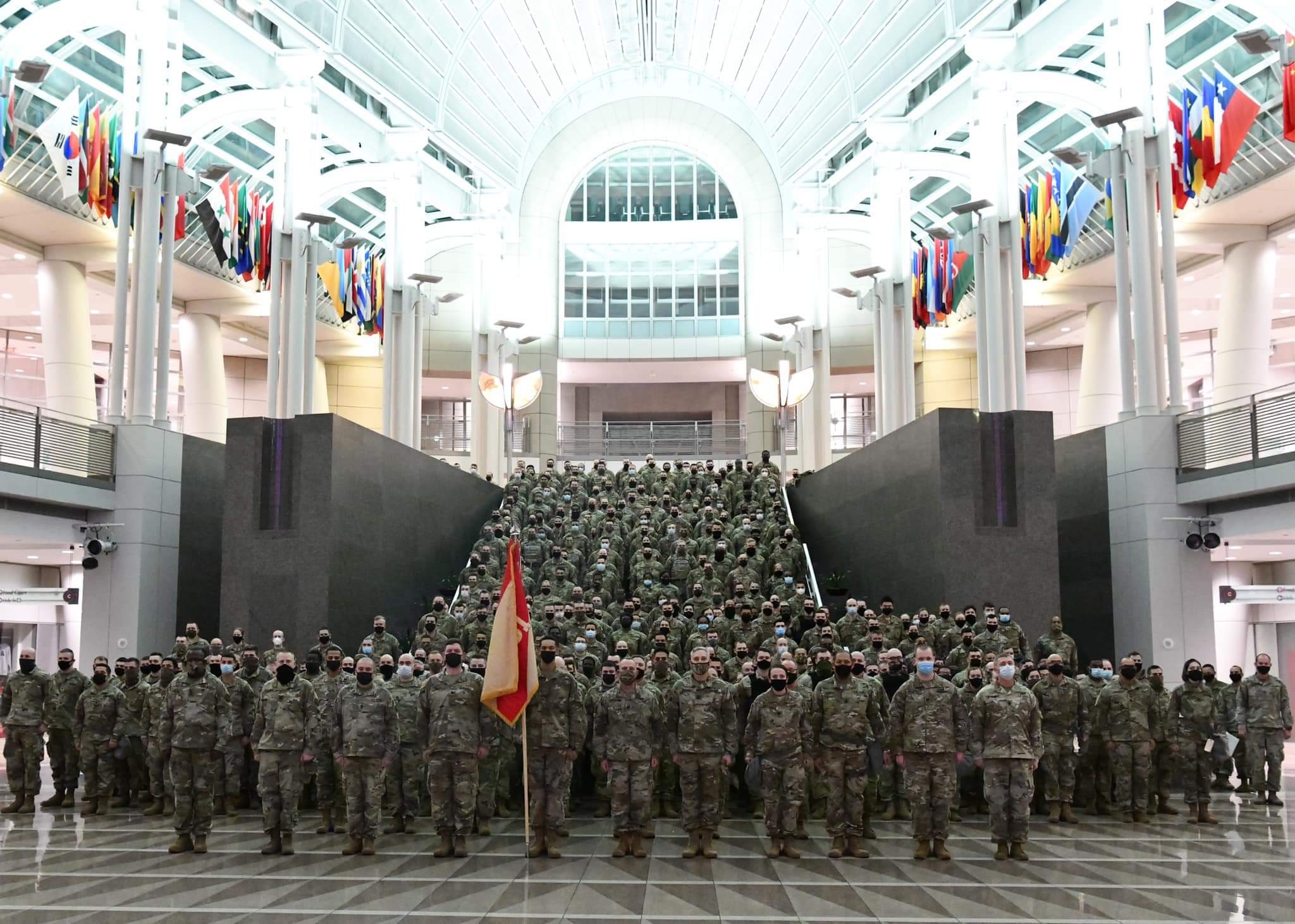
As National Guard members rally this week in Washington, D.C., including at least 500 from Massachusetts, it’s worth reflecting on America’s original citizen soldiers, now tasked with securing the Presidential Inauguration in the wake of last week’s violent attack on the Capitol.
As a seven-year veteran of the National Guard, I’ve never felt so strongly both the pride and the peril that goes with the uniform. Even after a particularly polarizing election cycle that sunk us to a new low, most of us can agree to support the troops. While we can endlessly debate whether Trump supporters or Black Lives Matter protesters harbor a greater capacity for violence, we can at least get behind the service members whose very mission is to keep us safe, whether from wildfire or hurricane, and increasingly to keep us safe from harming one another.
Other military branches like to poke fun at the National Guard, especially on social media. Think Mr. Incredible, scrambling off the couch when the call of duty comes and struggling to stuff his beer belly into a uniform that’s seen better days. These stereotypes carried more weight a generation ago than they do today.
In a post 9/11 world, the old standby of “weekend warriors”—nicknamed for the National Guard’s minimum commitment to one weekend a month and two weeks a year—is long gone. Getting called for a 6- to 12-month tour is the norm rather than the exception. Guard members are expected to maintain their readiness year-round, satisfy their fitness requirements and receive upgrade training. Leadership in recent years has put it more bluntly: Be prepared to deploy, or be prepared to get out.
I spent half of 2020 on orders with the National Guard, providing additional support to a combat readiness training center in Northern Michigan during the advent of COVID-19. Having worked my share of joint operations, I’ve witnessed the same degree of competence, fitness and fortitude on both the Guard and active-duty military side of the fence.
The real difference with the National Guard is age. While active duty is the domain of 18-25 year olds, most Guard members are in their 30s, 40s and even 50s, many of whom served on active duty in their younger years. I would argue that with age comes tempered experience, the kind that we assuredly need now.
After all, who would you rather see at the Capitol on Wednesday, fingers on the trigger of an AR-15 rifle, facing off against fellow citizens? Nervous 20-year-olds on their first real-world assignment or seasoned veterans? That’s a no-brainer.
I volunteered to serve on Guard duty at the Presidential Inauguration if needed, but was told that only members who have been specifically trained as military police officers will be called. That’s a good thing.
The optimist in me would like to believe that once the Inauguration is behind us, we will slowly heal and come together as a nation, to the point that domestic military security on our home front will no longer be necessary.
The realist in me knows the National Guard will continue to play an outsized role throughout 2021 and beyond. Political protests aren’t going away, not on the left or the right. And neither is the National Guard.
To that I can only say, Godspeed.
Better yet, Guardspeed.
 Brian Jarvis
You must be logged in to post a comment.