Takeaways From Teixeira: Why Great Power Requires Great Communication

When I transferred to a cyber unit of the Massachusetts Air National Guard in 2019, I’ll never forget the first words my new supervisor said to me: “Just don’t create any paperwork.”
 
I thought she was joking. She wasn’t. I waited for her to ask what brought me to the Bay State, how I was adjusting so far, or if I needed anything. She didn’t. The conversation was over.
I was new to the unit and didn’t know a soul. I kept thinking we would have a sit-down in the near future, preferably over coffee, so that we could discuss long-term planning and career goals. Swap stories on why we each enlisted and chose to cross-train into Comm (military speak for IT and all things cyber). Or at the minimum, she would formally introduce me to the rest of our roughly 30-member team, as just about any supervisor would. All of the things they drill into your head at Air Force leadership training.  
 
None of it happened. Not even the coffee. My new sup preferred to communicate almost solely by email and text. When I emailed back and asked if we could meet one-on-one so that I could receive hands-on instruction to properly run a software application (of which she was widely considered an expert), she didn’t reply. Then Covid struck and I spent six months on active orders, including a stint in Washington, DC as part of the wave of National Guard members called in to defend the Capitol following the January 6 insurrection. 
 
How often did my supervisor feel the need to check in on her troop, to ask how things were going during those unprecedented historic events? Never.
 
Having served in the Guard in two other states, I’ve experienced both the midwestern hospitality of Illinois and the melting pot of California. This was my first brush with the cold shoulder of the Northeast.
 
Reading the headlines on Jack Teixeira this past week and his leaking of classified documents, I can’t help but wonder: Was his supervisor similarly disengaged? Was anyone regularly checking up on him? Teixeira and I served at different units, and certainly my experience is not unique to any region of the country nor to any branch of the military. We all have a sucky supervisor story to share.  

But if there’ is any career field that deserves an extra dose of the human touch when it comes to handling troops, it’s the tech field. While we may fear (with reason) shadowy foreign adversaries plotting against us, the greatest cyber threat is always the insider threat sitting at the cubicle next to you.  
 
Day-to-day IT operations can be mundane, even in the military. But like a firehouse that’s quiet 95 percent of the time, when smoke starts billowing out of a tall building, the consequences can be deadly. Many people are surprised that a 21-year-old enlisted Airman would have access to classified documents. To which I reply, those same 21-year-olds throughout the military have access to shoot automatic rifles, operate high-velocity tanks, and pilot aircraft armed with nuclear missiles. A considerable portion of the military itself comprises 18-25 year olds.  
 
As Teixeira’s fate plays out, there will be many, many briefings on cybersecurity dos and don’ts, aimed at those like me who work in military IT roles. There will be discussion on proper procedures and acceptable level of classified access. There will be debate on monitoring social media activity among servicemembers. To which I would add one more conversation header: Know your troops. Talk to them, check in on them, spend time with them. In many case studies of intelligence breaches, there were plenty of warning signs.   

I lasted only two years in Massachusetts before transferring to a Guard unit close to my hometown of St Louis, around the same time that my biannual Enlisted Performance Review (EPR) came due. An EPR includes your job description, work projects, volunteer service, and a rating scale of your strengths and areas of improvement. Given that servicemembers often transfer units every few years and new troops are the norm, an EPR can shed light on just what kind of new troop you’re getting.
 
Except that my current unit never got my latest EPR, because that same former supervisor never bothered to provide one. After a year of getting our calls and emails ignored, we finally gave up and submitted a “gap report” to explain the breach in protocol, and wrote our own EPR from there. 

What kind of troop was my new unit getting with me? Without an EPR, they had no way of knowing.  
 
I’ll foot-stomp it one more time: Get to know your troops, and know them well. Very well.
In a Time of Crisis, a Nod to the National Guard

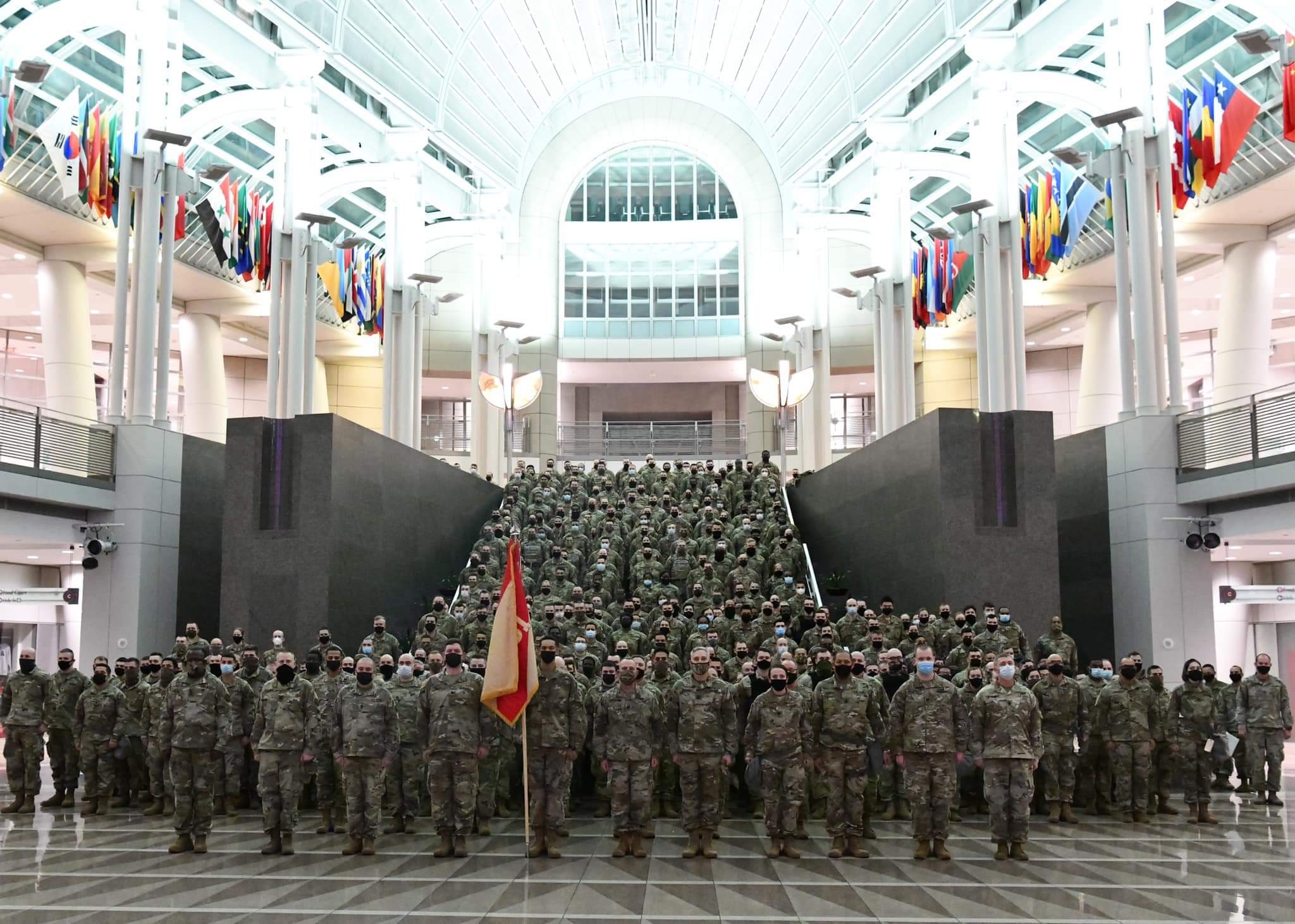
National Guard troops Washington DC Operation Capitol Response February 2021
National Guard troops in Washington,D.C. as part of Operation Capitol Response, February 2021

As National Guard members rally this week in Washington, D.C., including at least 500 from Massachusetts, it’s worth reflecting on America’s original citizen soldiers, now tasked with securing the Presidential Inauguration in the wake of last week’s violent attack on the Capitol.

As a seven-year veteran of the National Guard, I’ve never felt so strongly both the pride and the peril that goes with the uniform. Even after a particularly polarizing election cycle that sunk us to a new low, most of us can agree to support the troops. While we can endlessly debate whether Trump supporters or Black Lives Matter protesters harbor a greater capacity for violence, we can at least get behind the service members whose very mission is to keep us safe, whether from wildfire or hurricane, and increasingly to keep us safe from harming one another. 

Other military branches like to poke fun at the National Guard, especially on social media. Think Mr. Incredible, scrambling off the couch when the call of duty comes and struggling to stuff his beer belly into a uniform that’s seen better days. These stereotypes carried more weight a generation ago than they do today.

In a post 9/11 world, the old standby of “weekend warriors”—nicknamed for the National Guard’s minimum commitment to one weekend a month and two weeks a year—is long gone. Getting called for a 6- to 12-month tour is the norm rather than the exception. Guard members are expected to maintain their readiness year-round, satisfy their fitness requirements and receive upgrade training. Leadership in recent years has put it more bluntly: Be prepared to deploy, or be prepared to get out. 

I spent half of 2020 on orders with the National Guard, providing additional support to a combat readiness training center in Northern Michigan during the advent of COVID-19. Having worked my share of joint operations, I’ve witnessed the same degree of competence, fitness and fortitude on both the Guard and active-duty military side of the fence.

The real difference with the National Guard is age. While active duty is the domain of 18-25 year olds, most Guard members are in their 30s, 40s and even 50s, many of whom served on active duty in their younger years. I would argue that with age comes tempered experience, the kind that we assuredly need now.

After all, who would you rather see at the Capitol on Wednesday, fingers on the trigger of an AR-15 rifle, facing off against fellow citizens? Nervous 20-year-olds on their first real-world assignment or seasoned veterans? That’s a no-brainer. 

I volunteered to serve on Guard duty at the Presidential Inauguration if needed, but was told that only members who have been specifically trained as military police officers will be called. That’s a good thing.

The optimist in me would like to believe that once the Inauguration is behind us, we will slowly heal and come together as a nation, to the point that domestic military security on our home front will no longer be necessary.  

The realist in me knows the National Guard will continue to play an outsized role throughout 2021 and beyond. Political protests aren’t going away, not on the left or the right. And neither is the National Guard.

To that I can only say, Godspeed. 

Better yet, Guardspeed.

Don’t Let Your Writing Get “Ghosted” on the Web

Ghosting refers to more than a hot date who suddenly pulls a disappearing act on you. Your work as a writer can disappear too.

Sometime in the ‘00s, saving copies of your writing in any shape or form became a thing of the past. After all, once you publish online—be it a freelance article for a news site or a blog post for a company landing page—digital ink is permanent, right?

Wrong.

ghost-emojiOver my 15-year writing career, it’s likely that 95 percent of the articles I wrote have vanished from the Internet. Gone. Poof. Google turns up zilch.

Whether you’re a blogger, journalist or content creator, chances are you’ve been “Internet ghosted” at least a time or two. It’s not so much the dark web we have to fear as it is the disappearing web. Take me for instance:

  • From 2006-2008 I was a daily reporter for two newspapers, but zero articles remain online. One paper deleted all its old articles after changing ownership; the other makes its archives inaccessible to non-paying subscribers.
  • While in graduate school at the Missouri School of Journalism, I wrote for its school-affiliated paper with a circulation of 100,000. Some of my articles remain but are blocked by a paywall put up without warning, thereby making the links unusable as writing samples to prospective clients.
  • In San Francisco I covered a tech conference and co-wrote a long-form blog post for its then-sponsor, wearableworld.com. Within six months the website rebranded as ReadWrite and removed any trace of wearable technologies. My contact there told me they had a “plan” to migrate older pieces but no timeline. Three years later and still nothing.
  • Over the last decade, I’ve written articles and guest posts for numerous startup sites, ranging from travel tips to small business marketing strategies. Nearly all of those sites are now shut down, and my copy vanished along with them.

I have more examples but you get the point. Clearly this is a trend.

So next time your writing is published, don’t leave fate in the hands of a webmaster. Reprint articles on your personal blog and be sure to list or link to the original source. Print them out the old-fashioned way and store for your records. Or, if you don’t want to kill trees, save them as PDFs and email the PDFs to yourself. While you’re at it, if you still write rough drafts in Word as opposed to a cloud-based app, get in the habit of emailing drafts to yourself at the end of the day.

If not, a day may come when you suddenly need to dig up your work—to add to your LinkedIn profile, attach to a job application, or simply show off to a loved one—only to find that its been erased from (virtual) existence.

You can’t control what happens after you swipe right on Bumble, but you can control what happens to your writing. Don’t leave it to a ghost of a chance.

A version of this article also appears on LinkedIn.

Injured in the Field: Reeling from a rupture

Sadly, my deployment to United Arab Emirates has been cut short.

Barely a few months in—just enough time to get comfortable doing my job in the desert—I ruptured my Achilles tendon during a freak accident at the gym. I wish I could say that it occurred while I was rescuing women and children amid hostile fire, but in truth it’s the sort of injury that’s just as likely to occur during a pick-up basketball game as in a combat zone.Deployed With General

Because the medical facilities here in the desert are not set up to treat this sort of injury or to aid long-term recoveries, the military is sending me back. Because I belong to an Air National Guard wing rather than an active-duty base, the Air Force is sending me home to Northern California where I will be treated by civilian doctors rather than military doctors.

It sucks—but it’s not the end of the world. The military will pay for my surgery and rehab, and for that I’m grateful.

I’m also grateful for the opportunity to have worked with a top-notch PA team for my tenure at Al Dhafra Air Base. Tech. Sgt. Anthony Nelson, Staff Sgt. Colton Elliott, and Maj. Jodi Grayson. You will be missed. In the photo is Brig. Gen. Derek C. France, Commander, 380th Air Expeditionary Wing, as he bids me farewell.

My recovery should take three to six months. As it’s not a career-ending injury and I’m anticipated to make a full recovery, I could even deploy again someday.

Down but not out.

I’ll be back.

Public Affairs, Desert Style: What Military Media and Traditional Media Have in Common

  • “Is PA ready to shoot?”
  • “Affirmative. PA is standing by.”
  • “Shoot away.”

PA stands for Public Affairs, where “shooting” a human target is done primarily with a video or still camera. It’s where military meets media, and it’s the only job I’ve had—or wanted—in the Air Force.

PABefore enlisting I spent the better part of a decade in journalism. Newspaper reporter, radio producer, TV anchor. My dream job was foreign correspondent, but due to budget cuts, most major news outlets had already begun downsizing their overseas bureaus if not gutting them altogether. How else could I combine my love of storytelling with a burning desire to travel? Enter Public Affairs.

But is military public affairs really journalism? And is it good training for those new to the field or those simply looking for a way to stay connected? Here’s what they have in common:

Find a good story. Military service has a rep for everyone “doing as they’re told,” but my PA supervisors in the Air Force rarely instruct me on what to report each day. Even in the Mideast desert while deployed, I find newsworthy subject matter the same way I did as a civilian reporter: pounding the pavement (or in this case pounding the sand), talking to people, attending meetings and councils, and handing out business cards. Unless I’m editing, there’s no reason to be sitting inside a stuffy office.

Multimedia, multiplatform, multitask. As traditional newsrooms crews have grown leaner and more versatile, so have military PA teams. Since taking broadcast journalism at the Defense Information School in 2013, the program has already restructured itself so that every student is trained in print writing, still photography, radio and video operations, plus additional courses in graphic design and social media. A generation ago each of those interests was a full-time job in itself. Today they’re all increasingly carried out by one enterprising backpacker. The PA shop at my deployed location, in fact, has only four personnel to cover a base occupied by thousands of service members.

Travel. Journalism can take you places, and so can the military. As a journalist, I had access to major events from NASCAR races and death penalty trials to presidential debates. As a military broadcast journalist, I’ve interviewed generals, flown on helicopters and documented training missions in Hawaii, the Azores and the United Arab Emirates. Note these “missions” included 12-hour workdays and cramped living quarters, such as tents. Journalism by definition will get you in the thick of the action.

“Tell the truth. Minimize harm.” This is the journalist’s creed I was taught. It’s up for debate how many news outlets still adhere to this principle in the era of the 24-hour news cycle, but the military always looks to mitigate risk when it comes to the release of information. Examples: I recently covered a refueling mission that ultimately dropped bombs on an Al Qaeda opium field in order to disrupt their production and revenue stream. Releasing the story too soon clearly would have jeopardized the mission. Or, when producing stories on everyday Air Force activities, I often blur out identifying numbers on planes or last names on uniforms in order to protect identities from those who seek to do harm to the U.S.

Final takeaway: Even if you have no desire to enlist in the military, as a civilian journalist you can still cover the military. News outlets like military.com and Stars & Stripes are largely run by civilians with no military background. Or to get a full-on taste, apply to be embedded within an overseas military unit and see it up close.

Deployment Diary: First Stop, Norfolk

141101-Z-EM371-006My first deployment with the Air National Guard has come quite by accident. For years I’ve wanted to deploy overseas, but in the end it was a cancellation more so than pestering my supervisors that sealed the deal (click here for a more detailed account).

Unlike the movies, this is not a last-minute affair with some crusty sergeant declaring you now have 12 hours to pack your bags and say goodbye to your spouse and kids before shipping out. I’ve had almost a solid year to prepare, get paperwork and passports in order, get introduced to my soon-to-be colleagues via FB, and even find a sub-letter for my apartment.

Navy Sea MermaidNow that my departure date has finally arrived, it turns out that getting there is quite the adventure in itself. After nearly a week of holding in place at Norfolk Navel Station, eating meals in the galley amid bright blue uniforms boarding on and off ships the size of the Titanic (my favorite monument there is the Navy sea mermaid, pic to the left), I taxi’d to the AMC Passenger Terminal to board my rotator plane. Our first stop will be a 0130 flight to Ireland.. then to Kuwait.. and finally to United Arab Emirates (unspecified location). Nearly two straight days on planes, assuming no delays. If you’re accustomed to direct flights at convenient times, don’t ever join the military.

As a Public Affairs broadcast journalist, I am carrying almost $10K worth of camera gear in a mobility case weighing over 100 lbs, plus two additional oversized bags as well as a carry-on backpack. When I first enlisted at age 36, I never thought I could take it this far.  As of this writing I’m 41 — high time to scratch deployment off the bucket list while I still can.

Adventure awaits; the unknown is what I live for.

The Three Reasons Wearables Won’t Be Mainstream Anytime Soon

Co-written by Brian Jarvis and Janice Cuban.
This article ran in July 2014 on Wearable World News (now readwrite.com).

The wearables market is the hottest tech trend of the past year and shows no signs of slowing down, yet that’s a lot of performance pressure for an industry expected to reach $30B by 2018. Despite the hooplah, wearables are still a niche market, embraced by early adopters playing with the latest gadgets, technology pundits pontificating on the industry, and brands stalking crowdfunded projects for the next great idea to snatch up. Reality check: Many potholes remain in the road to wearables becoming our next generation of personal and household products.

Continue reading

“Trust me, I’m a Consultant…”

George Clooney plays a corporate downsizer for hire in the 2009 film Up the Air, but most consultants do positive work.

Choosing a job title is serious business nowadays. If you’ve ever attended a Meetup group or built a LinkedIn profile, you know what I mean. Almost every day we inevitably encounter some variation of “So, what do you do?” The answer had better be truthful, easy to grasp, and (most importantly) make you proud to say it.

“Consultant”—the title on my business card—is wonderfully malleable. Depending on who’s talking, it can mean just about anything. Let’s examine just what consulting entails across the career spectrum, and why it’s a fast growing profession.

Continue reading